

Over the course of 2025, APNIC partnered with Network Operator Groups (NOGs), Computer Emergency Response Teams (CERTs), conference organizers, and other parts of the Internet community to develop technical capacity in our region.
Region-wide, APNIC trainers delivered 68 in-person training sessions, spending time with over 1,695 participants of our community in 23 economies.
The region-level numbers don’t tell the complete story though. For instance, the most taught topics across the Asia Pacific in 2025 include IPv6 (23%), Network Management & Monitoring (NMM, 12%) and Network Security (11%). A closer look gives a more interesting picture of the technical priorities within our region.
IPv6
IPv6 was a key focus of 33 training offerings this year, touching on the IPv6 protocol and architecture, address planning and deployment, security, and transition techniques.
Trial offerings of an associate-level IPv6 certification, designed for professionals seeking foundational knowledge and practical skills in IPv6 deployment, led to certifications in Bangladesh, Thailand, and Indonesia.
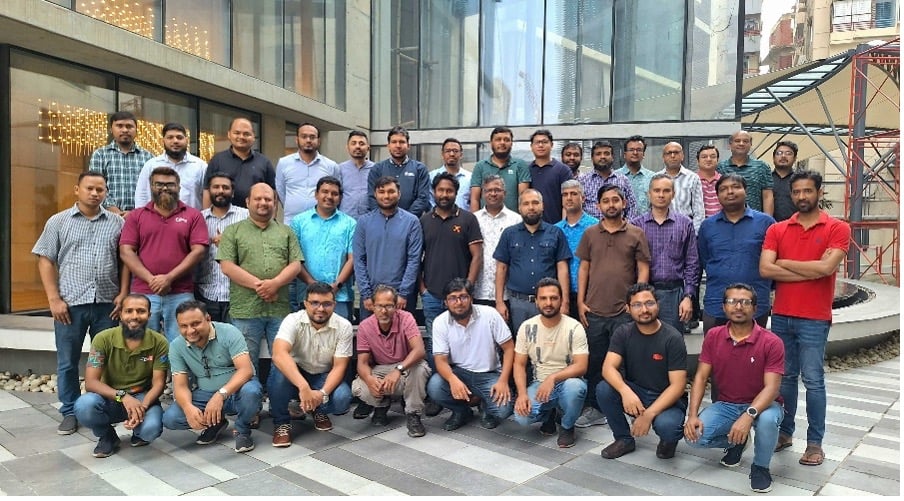
The Bangladesh Research and Education Network (BdREN) hosted the five-day IPv6 Certification training in Dhaka in May 2025. Participants from diverse industry domains including Internet Service Providers (ISPs), data centres, telecom operators, universities, and large enterprises came together to build essential skills in IPv6 deployment and network operations. Highly technical workshops and deeply engaged participants led to enhanced technical capacity in Bangladesh, according to BdREN.
China provides another example of regional IPv6 skills development. From 3 to 4 December 2025, 64 participants joined a Mandarin-language online IPv6 and RPKI workshop from a range of industries and sectors including telcos, cloud companies, education, manufacturers, and more.
Since the last face-to-face workshop on the topic in the economy, IPv6 growth has increased substantially. Drawn from regions across China, participants were keen to pick up the skills they’d need to support the economy-wide aspirations for IPv6 leadership.
In addition to showing strong interest in adopting IPv6 in their own organizational networks, survey results showed that participants were interested in preventing route hijacks by creating Route Object Authorizations (ROAs) in the short term.
Network security
Given the risks and prevalence of cybersecurity incidents, it should be no surprise that network security training requests came from economies across our region. From Malaysia, Japan, Lao PDR, Thailand, and Taiwan, to Mongolia, Hong Kong, Bangladesh, and Timor Leste, APNIC trainers delivered material designed for network managers and operators, engineers, and policy makers to gain a better understanding of security operations.

The Network Security workshop at HKNOG 14 is a prime example. While the workshop agenda covered a range of topics across the network security spectrum, participants said they could apply what they learned in segments on Resource Public Key Infrastructure (RPKI) and IPv6 security immediately.
The Phoenix Summit 2025, held in Dhaka, Bangladesh from 19 to 24 May 2025, took a similarly hands-on approach to cybersecurity skills development, including a three-day workshop on honeypots and threat hunting. A mix of seasoned professionals and students deployed honeypots and honeytokens, analysed real artefacts, and built automated threat hunting systems using open-source tools.
By uplifting local expertise and learning by doing, the Internet community in our region is developing and practicing the skills they’ll use to keep the Internet stable and secure in their own economies.
IXP deployment
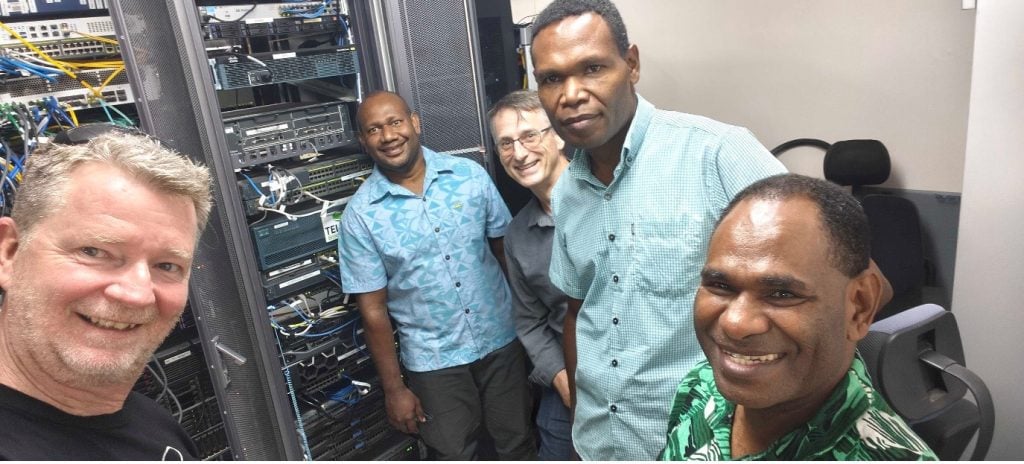
Internet Exchange Points (IXPs) form the backbone of the modern Internet. By keeping traffic local, they cut latency, boost performance, and lower transit costs. IXPs are key to growing a local Internet Service Provider (ISP) business and regional content eco-systems.
Vanuatu was the first Pacific Island economy to deploy an IXP, with the Vanuatu Internet Exchange (VIX) becoming operational in 2013. Work on an upgrade began in 2024, but damage from a major earthquake disrupted and delayed the project. In November 2025, work resumed to deploy the upgrade.
Fifteen members of the Vanuatu Internet community came together in November for an IXP operations workshop that combined theory and practical exercises. Representatives from local telecommunications companies and ISPs prepared to operate and make the most of their upgraded infrastructure.
Then, a team including experts from the Vanuatu Office of the Government CIO (OGCIO), ISOC, and APNIC Community Trainer Jethro Tambeana deployed the upgraded hardware and IXP Manager software. This upgrade delivered significant improvements, adding features like a Member Portal, traffic graphs, and RPKI Route Origin Validation (ROV). ISPs have been migrating their connections to the new infrastructure, with a target completion date of 19 December.
The combination of local skills and on-the-ground knowledge with multistakeholder collaboration is delivering better service to Internet users in Vanuatu.
Different priorities, one Internet
A global, open, stable and secure Internet relies on critical infrastructure, essential cybersecurity operations, and advanced network technologies.
While the needs and priorities of the economies in our region vary, there is a common need for Internet operations skills to deliver the Internet that increasing numbers of people in our region depend on.
What are your training priorities?
It isn’t too late to upgrade your Internet operations skills in 2025, or start planning for 2026. Sign up for training on APNIC Academy.
The views expressed by the authors of this blog are their own and do not necessarily reflect the views of APNIC. Please note a Code of Conduct applies to this blog.