

Welcome to our latest PeeringDB update. While we publish release notes with each update and promote new features and bug fixes on social media, these reports take a broader look at recent changes.
You can find our previous half-yearly reports here, here, and here.
Operational changes
We’ve completed our migration to Kubernetes, giving us greater flexibility to scale quickly as demand increases.
We’ve also introduced rate limiting for unauthenticated web users. In late 2025, we experienced unprecedented traffic from automated web scrapers. While API users were already rate-limited, web users weren’t, based on the assumption that human usage patterns wouldn’t create a significant load.
However, automated scraping activity did impact performance. Unauthenticated web traffic is now limited to 120 queries per minute. We’ll continue to monitor usage and adjust this limit as needed.
Improved ASN comparison
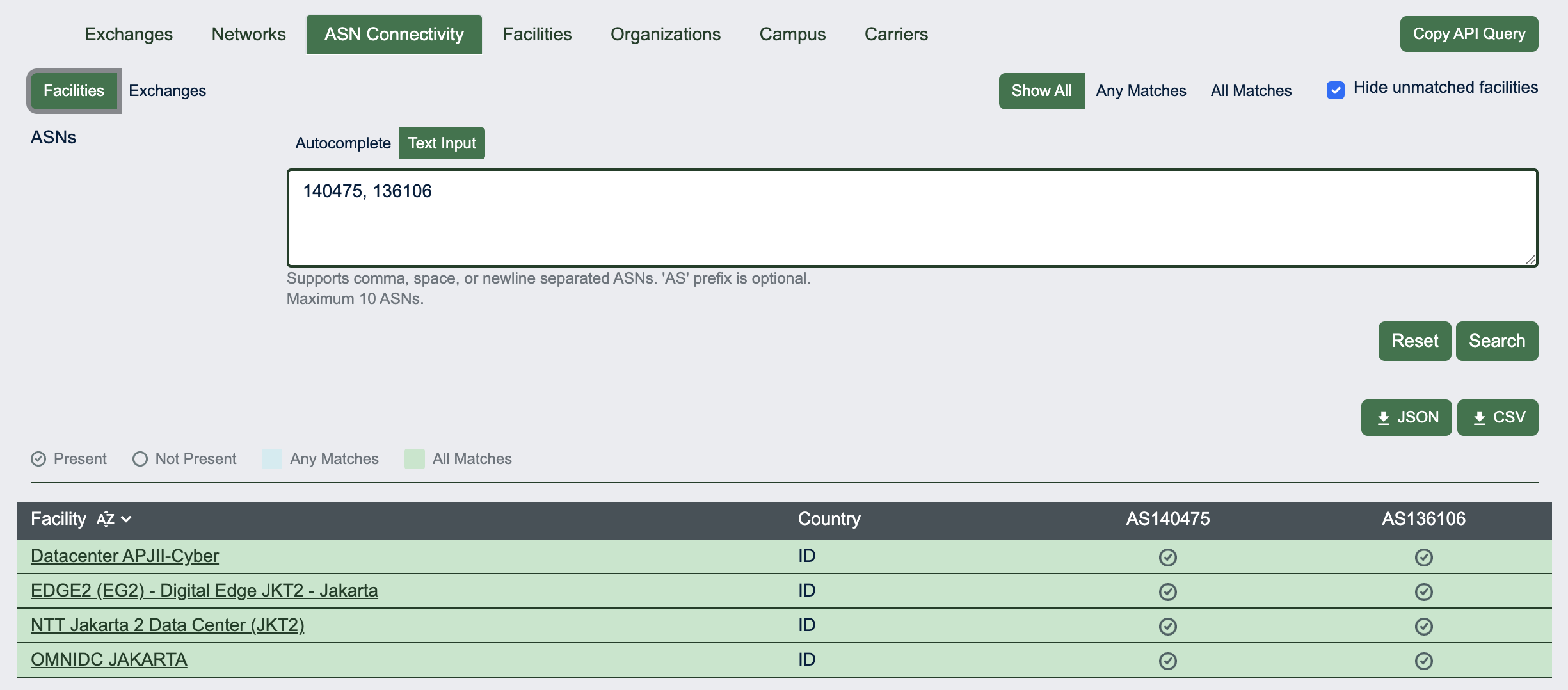
We’ve enhanced the Autonomous System Number (ASN) comparison feature in Advanced Search, making it more flexible and easier to use. You can now:
- Enter a list of ASNs manually or use the autocomplete function.
- Compare ASN presence across both exchanges and facilities.
- View the economies where matches are located.
- Apply dynamic filters directly on the results page.
Data quality
We’ve continued to improve location data normalization to make search and analysis more consistent and reliable. Standardizing how places are presented ensures each location has a single, canonical name while still supporting flexible user input.
We recognize that users may prefer different spellings or languages, so you can search using your preferred format. For example, searching for interconnection facilities in नई दिल्ली will return results for New Delhi.
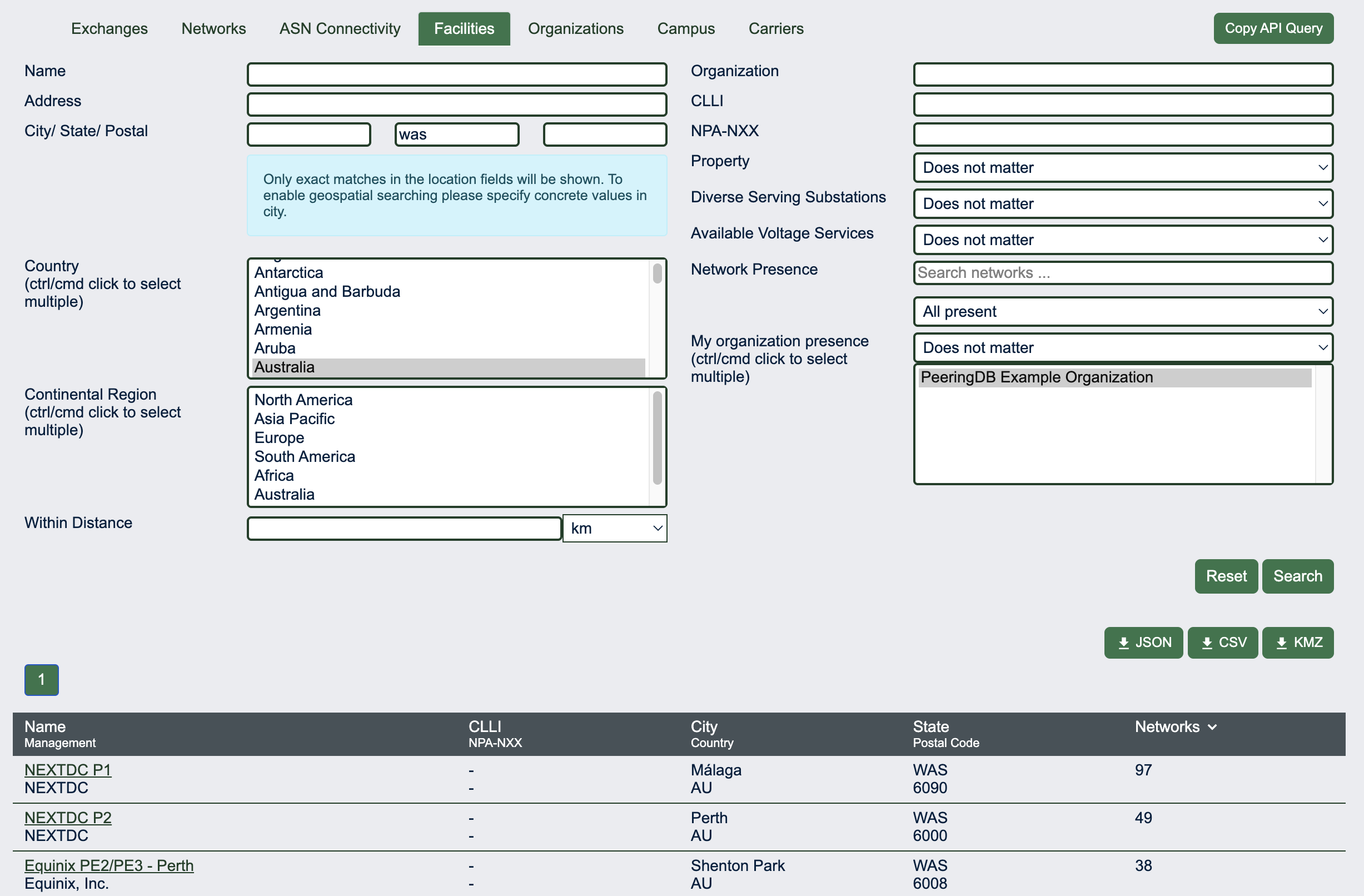
We now normalize all economies using ISO 3166 codes.
We also standardize the presentation of internal divisions, such as states and provinces, where it adds value. As these divisions aren’t equally relevant across all economies, this is applied selectively. If you notice any gaps or have suggestions, we welcome your feedback to further improve location data normalization.
Expanded ‘copy an API query’ feature
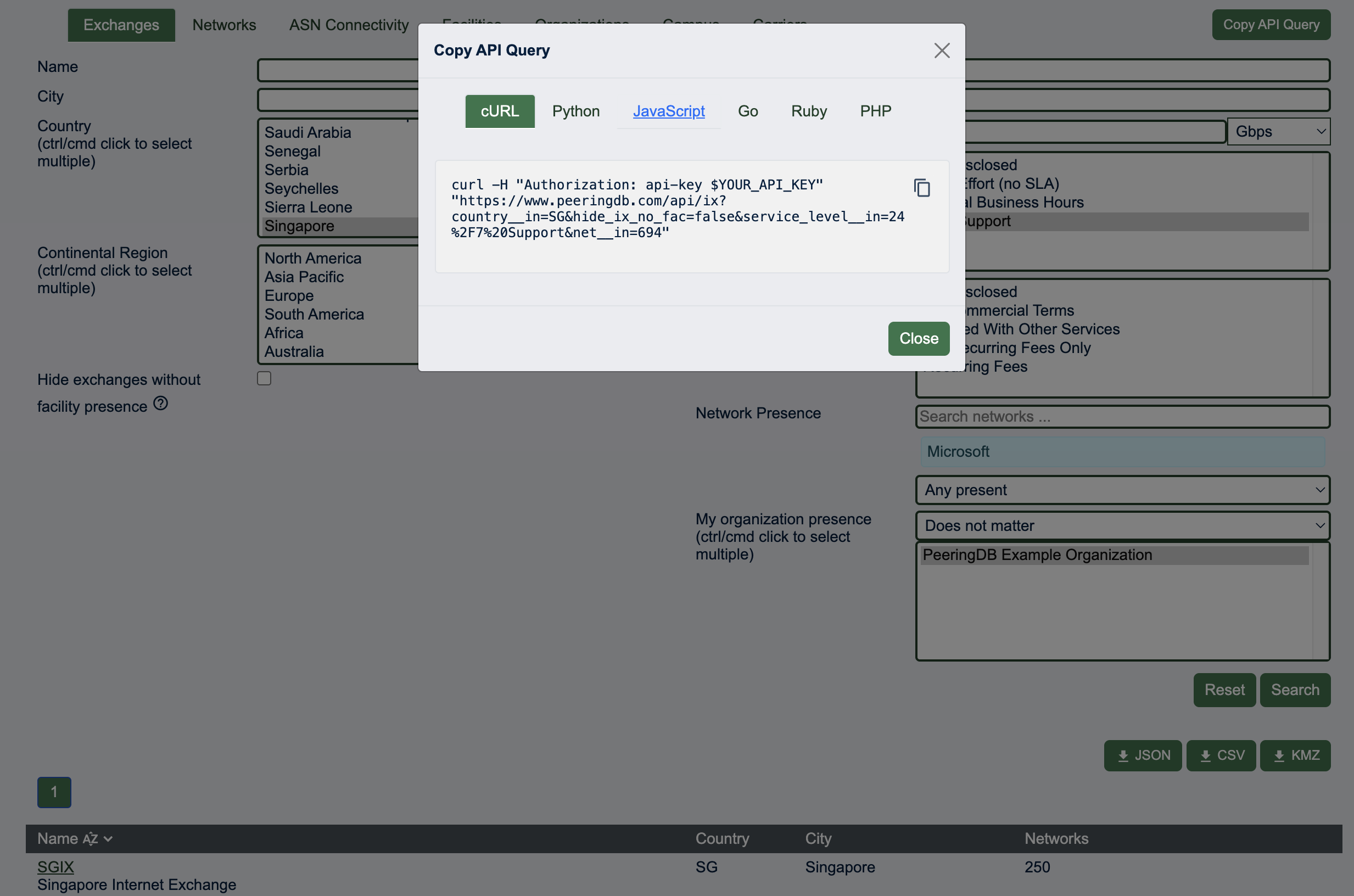
In March 2025, we introduced a feature that generates correctly formatted API queries for basic searches. We’ve now extended this capability to Advanced Search, making it more powerful and helping users work more efficiently with PeeringDB.
You can continue to generate queries in multiple formats, including curl, Python, JavaScript, Go, Ruby, and PHP.
Looking ahead
We’re exploring ways to support AI-assisted software development for PeeringDB. We expect growing demand from users who want to build and contribute features, whether directly to the service or through local mirrors operated under our Acceptable Use Policy.
A key priority will be maintaining code quality and service integrity. All contributions will need to be carefully reviewed and thoroughly tested before deployment to minimize bugs and ensure reliability.
We’ll share updates through our regular meeting notes, GitHub, and this blog.
If you have ideas to improve PeeringDB, you can post them on our low-traffic mailing lists or open an issue on GitHub. For data quality issues, please contact us at support@peeringdb.com.
PeeringDB is a freely available, user-maintained database of networks and the go-to location for interconnection data. The database facilitates the global interconnection of networks at Internet Exchange Points, data centres, and other interconnection facilities, and is the first stop in making interconnection decisions.
Leo Vegoda is PeeringDB’s Product Manager.
The views expressed by the authors of this blog are their own and do not necessarily reflect the views of APNIC. Please note a Code of Conduct applies to this blog.