

When Motorola unveiled its Iridium global satellite-based mobile telephony service in the late 1990s, everything augured well for a revolution in the satellite communications market, only it didn’t happen. Technically, Iridium was very much leading-edge. The service uses 66 satellites in polar orbits with 11 satellites in each orbital plane, orbiting at an altitude of 780km. Each satellite had 48 down-facing spot beams, arranged in three sectors, each with 16 beams. The satellites supported inter-satellite microwave cross-links, operating at 10Mbps.
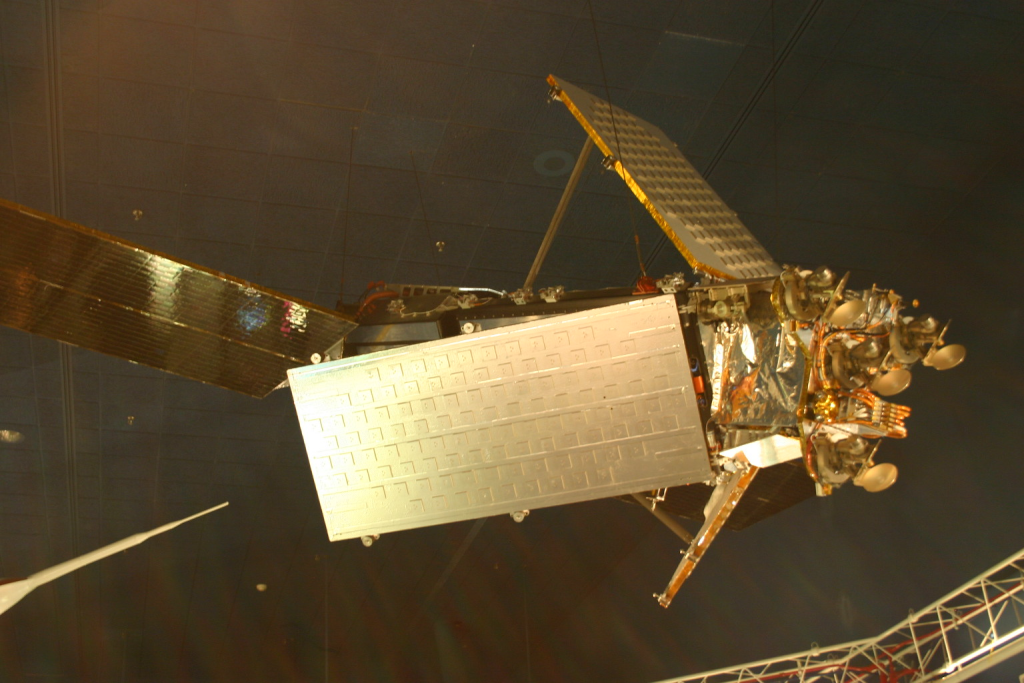
Iridium’s reception was not overly enthusiastic. Consumers found the Iridium handsets expensive to purchase and use, and the service only operated in a few markets. The issue was that Iridium was met with stony resistance from almost every terrestrial mobile phone provider, and these local providers placed pressure on national regulatory bodies to refuse the necessary regulatory approvals for Iridium to operate within each market. This was the major factor behind Iridium’s initial failure.
At the time, mobile services were one of the few services that generated high-margin revenue for the carriage industry, and there was a fear that Iridium could operate in a disruptive manner and threaten margins for the incumbent terrestrial providers. Other negative factors included poor reception quality inside buildings and a service profile that only supported heavily compressed voice (2.4kbps). Demand was insufficient to recoup the USD 5B that had been invested in Iridium, which then became the biggest bankruptcy (at the time) in US history. The billion‑dollar system was sold for only a few tens of millions of dollars. Although the Iridium service managed to survive, the outcome left a lasting sense of disappointment. As a result, interest in global services built on costly Low Earth Orbit (LEO) satellite constellations went quiet for more than a decade.
Thirty years later, the situation has changed. The rich attractions of the mobile service market have been eroded to the extent that mobile service is operating at margins that are roughly consistent with a commodity market, so there is little left for incumbents to defend. At the same time, the launch costs to place payloads into a low Earth orbit have dropped, and the cost of digital signal processing has dropped, while the signal processing capabilities have improved.
Starlink is a technically impressive service. Using phased array software-steerable antennae and a 1m terrestrial dish, looking some 340km to 550km upward to a constellation of some 10,000 spacecraft, the system can provide Internet access at speeds of some 200Mbps to almost anywhere on the surface of the earth.
Starlink also provides a service for mobile phones, but there are some quite severe restrictions on the signal capabilities of their service. This is due to the unfocused transmission of the mobile device, the limited transmission power and the 350km distance between handset and spacecraft. Reports of available capacity for mobile devices using Starlink are apparently in the order of Kbps, so the service is limited to SMS and location services, and to some extent, voice capability.
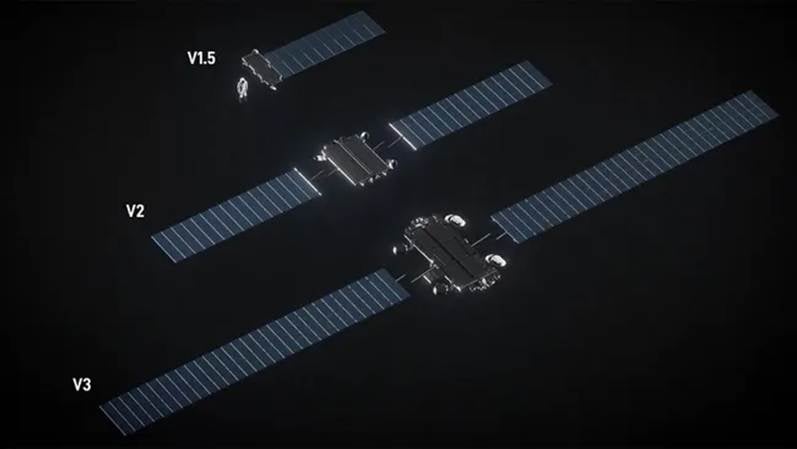
Starlink is in the process of launching a constellation of some 840 satellites that will support D2D services. Recent reports suggest that Mbps speeds to mobile devices are possible from these satellites, with up to 17Mbps downlink and 7Mbps uplink. The ability to use a mobile device without an antenna is obviously an attractive proposition, and interest in Starlink’s Direct-to-Device (D2D) has been expressed from several mobile network operators, including T-Mobile in the USA, KDDI in Japan, One NZ in New Zealand, Optus in Australia and Rogers in Canada.
Amazon Leo is launching some 3,250 spacecraft into slightly higher orbital planes of around 600km, apparently offering a service portfolio similar to that of Starlink. In 2024, Apple invested in Globalstar with a 20% stake and funding for an expansion of its fleet of satellites to support Apple’s Emergency SOS, Messages, Find My, and Roadside Assistance via satellite on iPhone and Apple Watch. It is reported that GlobalStar has allocated some 85% of its network capacity to Apple for this service. In April 2026, Amazon announced the acquisition of Globalstar, enabling Amazon Leo to provide D2D services based on the existing Globalstar and expand its D2D platform in the near-term future.
If you want to serve mobile devices in a manner that is similar to the service from terrestrial networks from a space platform, the basic requirement is to increase the signal power and signal sensitivity. That’s where AST SpaceMobile and their spacecraft come into play. This is a spacecraft with a very large antenna, some 223sqm in size, where the earth-facing side is an array of phased array units, and the other side is covered by solar panels. AST’s deployment plans for 95 of these spacecraft in orbit. Communication with the satellites uses the Q/V bands. With their large antennae, they intend to operate as a space-based mobile base station with direct-to-handset 4G and 5G digital service using the 3GPP standards, using the 900MHz Band 8 LTE, with conventional voice and data services. AST will use a 5MHz bandwidth allocation, compared to 5G’s allocation of 145MHz.
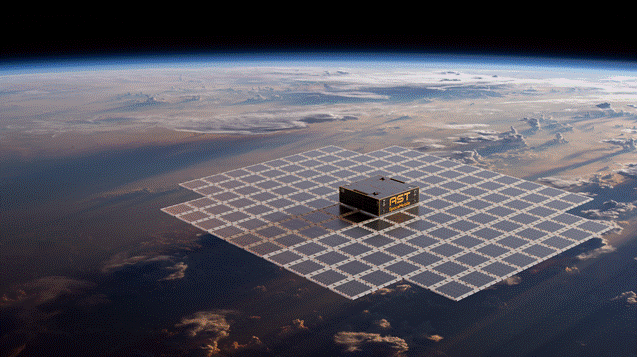
AST’s commercial model is not a Starlink-style direct retail model, but a wholesale one based on service agreements with local mobile providers. The local mobile provider operates the ground stations and connects the ground stations directly to the terrestrial mobile network. It’s not clear yet whether the AST offering is another run of the Iridium story, but such an outcome is a distinct risk in its focus on the mobile handset market.
It’s an interesting set of market tensions that are at play here. Is there a viable market volume for services to mobile handsets alone that can sustain a dedicated mobile service operator such as AST? Or are terrestrial service platforms already so well established that the only exposed markets are niche markets in remote locations with low numbers of subscribers? And are the populations of such niche markets sufficiently large to meet the capital return requirements of the initial investment required to launch multiple LEO D2D services?
Starlink and Amazon Leo have headed in the other direction, driven by the market for high-speed data services that are priced competitively with many terrestrial providers. It appears that for these two platforms, the D2D mobile services are largely a secondary thought. The service quality available to mobile handsets is lower than users would normally expect from terrestrial 4G and 5G networks due to the physically smaller antenna and lower transmit power used by mobile handsets. Although in isolated remote locations, terrestrial services are not available, so there simply is no comparison to satellite-based D2D. The alternative model is the AST SpaceMobile approach, where the spacecraft is equipped with a very specialized antenna designed to provide support for 4G and 5G D2D services, but does not provide very high-speed data services. There are many dimensions to this story, including access to spectrum, ground stations, inter-satellite relays, wholesale and/or retail models, pricing, launch costs and spacecraft operational lifetimes.
No doubt we will hear more on developments in this new incarnation of the space race in the coming months.
The views expressed by the authors of this blog are their own and do not necessarily reflect the views of APNIC. Please note a Code of Conduct applies to this blog.